

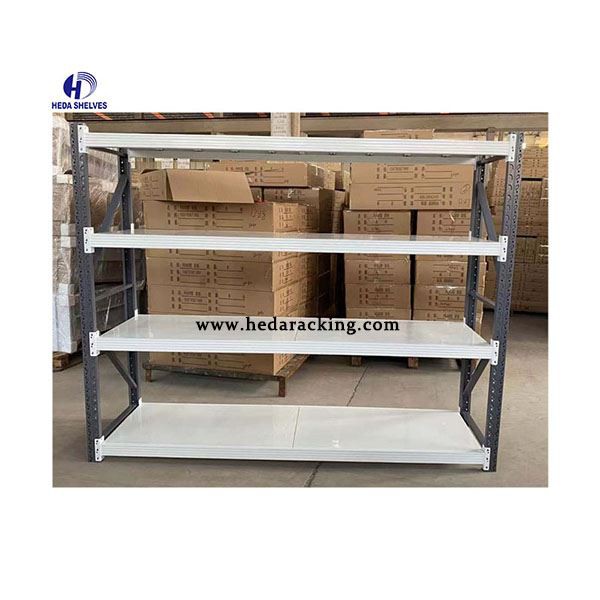
As a supplier of medium duty racks, I've had numerous in - depth conversations with clients about the impact resistance of these essential warehouse storage solutions. Impact resistance is a critical factor that can significantly influence the choice of a medium duty rack for any warehouse or storage facility.
Understanding Impact Resistance
Impact resistance refers to the ability of a medium duty rack to withstand sudden forces or collisions without significant damage. In a busy warehouse environment, forklifts, pallet jacks, and other moving equipment are constantly in operation. These machines can accidentally collide with the racks, and if the racks lack proper impact resistance, it can lead to structural damage, product loss, and even pose safety risks to workers.
The impact resistance of a medium duty rack is determined by several factors. Firstly, the material used in its construction plays a vital role. Most medium duty racks are made from either metal or steel. Metal Rack Warehouse Storage is a popular option due to its durability. Metal racks can absorb and distribute the force of an impact over a larger area, reducing the likelihood of localised damage.
Steel racks, on the other hand, are known for their high strength - to - weight ratio. Steel Rack offers excellent impact resistance as steel has inherent toughness. It can deform slightly under impact and then return to its original shape, preventing catastrophic failure.
Design Features Affecting Impact Resistance
The design of a medium duty rack also greatly affects its impact resistance. One important design element is the column and beam connection. A well - designed connection ensures that the force of an impact is transferred evenly throughout the rack structure. For example, some racks use bolted connections that can be tightened to provide a secure fit. These connections can withstand lateral forces better than simple hook - on connections.
Another design feature is the use of bracing. Bracing helps to stabilise the rack structure and prevent it from toppling over during an impact. Diagonal bracing, in particular, is very effective in resisting lateral forces. It distributes the impact force along the length of the rack, reducing the stress on individual components.
The shape of the rack components also matters. Rounded or curved edges on columns and beams can reduce the risk of damage during a collision. Sharp edges are more likely to concentrate stress, leading to cracks or breaks.
Testing Impact Resistance
To ensure the quality and reliability of our medium duty racks, we conduct various impact tests. One common test is the pendulum impact test. In this test, a pendulum is swung against the rack at a controlled speed and angle. The amount of deformation and damage to the rack is then measured. This test helps us to determine the rack's ability to withstand sudden impacts and to compare different designs.
We also perform real - world simulations. By using forklifts and other equipment to simulate accidental collisions in a controlled environment, we can observe how the racks respond. This allows us to make any necessary adjustments to the design or material to improve impact resistance.
Impact Resistance and Warehouse Safety
Impact resistance is closely related to warehouse safety. A rack that can withstand impacts is less likely to collapse or cause injury to workers. In a warehouse, a single rack failure can have a domino effect, leading to the collapse of adjacent racks and causing significant damage to stored goods.
Properly designed and impact - resistant racks also reduce the risk of product damage. When a rack is hit, it may cause the stored items to fall or shift. Impact - resistant racks help to keep the products in place, reducing the likelihood of breakage or spoilage.

Impact Resistance and Cost - Effectiveness
While impact - resistant medium duty racks may have a higher upfront cost, they are often more cost - effective in the long run. Racks that can withstand impacts require less frequent repairs and replacements. This reduces maintenance costs and downtime in the warehouse.
For example, if a non - impact - resistant rack is damaged in a collision, it may need to be replaced immediately. This can disrupt warehouse operations and result in lost productivity. In contrast, an impact - resistant rack can continue to function even after a minor collision, allowing the warehouse to operate smoothly.
Choosing the Right Impact - Resistant Medium Duty Rack
When choosing a medium duty rack, it's important to consider the specific needs of your warehouse. If your warehouse has a high volume of forklift traffic, you'll need a rack with high impact resistance. You should also consider the weight and size of the items you'll be storing. Heavier items may require a more robust rack design.
Our company offers a wide range of Shelves For Warehouse that are designed to meet different impact resistance requirements. We can work with you to understand your needs and recommend the most suitable rack for your warehouse.
Conclusion
The impact resistance of a medium duty rack is a crucial factor that affects warehouse safety, product protection, and cost - effectiveness. By understanding the factors that influence impact resistance, such as material, design, and testing, you can make an informed decision when choosing a rack for your warehouse.
If you're interested in learning more about our medium duty racks and their impact resistance, or if you'd like to discuss your specific storage needs, we encourage you to reach out to us. We're here to help you find the best storage solution for your business.
References
- "Warehouse Storage Rack Design and Safety Standards" - Industry Publication
- "Materials Science for Storage Equipment" - Academic Journal
- "Impact Testing of Industrial Structures" - Research Report