


When a supermarket chain plans to open multiple stores, expand into new markets, or upgrade its retail network, shelving procurement becomes more than an individual store purchase.
The purchasing team needs a reliable supply of gondola shelving and retail fixtures that can maintain a consistent store image while accommodating different store sizes, layouts, and merchandise requirements.
For supermarket chains, working with a manufacturer that can supply shelving across multiple locations helps simplify product sourcing, coordinate bulk orders, and maintain consistency throughout the rollout.
HEDA SHELVES supplies supermarket gondola shelving and retail display equipment for chain store projects, supporting buyers who need coordinated shelving products and customized fixture packages for multiple retail locations.
This guide explains how supermarket chains can organize shelving procurement for multi-store rollout projects, what products to include in a centralized purchasing package, and what information to prepare when requesting a quotation from a manufacturer.
Key Takeaways
- One supplier for multiple stores: Source supermarket gondola shelving and related retail display equipment through a coordinated supply arrangement.
- Consistent store appearance: Standardize shelving styles, colors, configurations, and display fixtures across different locations.
- Flexible store configurations: Use a common product range while adapting shelving quantities and arrangements to each store's floor plan.
- Bulk purchasing coordination: Consolidate product requirements across locations to organize purchasing and manufacturing.
- Project-based quotations: Provide store layouts, store quantities, product requirements, and rollout schedules to obtain a more accurate quotation.
Why Supermarket Chains Need a Coordinated Shelving Supply Strategy
A supermarket chain may operate stores in different cities, shopping centers, commercial districts, or residential communities. Although these stores share the same brand identity, their floor areas, layouts, and merchandise ranges may not be identical.
If each location purchases shelving independently, the chain may encounter inconsistent fixture appearances, different product specifications, fragmented purchasing, and difficulties when adding new stores.
A coordinated shelving supply strategy allows the purchasing team to manage these requirements at the chain level.
Maintain a Consistent Retail Brand Image
Customers should recognize the same supermarket brand whether they enter a large flagship store or a smaller neighborhood branch.
Consistent gondola shelving and display fixtures help establish this identity through:
- Unified shelving appearance and color selection.
- Consistent shelf and back-panel styles.
- Matching end displays and promotional fixtures.
- Coordinated checkout and other retail equipment.
- Consistent presentation across different store locations.
A standardized fixture package gives the chain a recognizable store environment while leaving room for location-specific adjustments.
Simplify Procurement Across Multiple Locations
Instead of sourcing different shelving products for every store, a chain can consolidate its requirements into a centralized purchasing plan.
This makes it easier to:
- Coordinate product specifications across locations.
- Consolidate orders for bulk manufacturing.
- Manage different store quantities under one purchasing project.
- Arrange product requirements for phased store openings.
- Maintain a consistent supplier relationship as the retail network expands.
For purchasing departments managing several store openings, a coordinated manufacturer relationship can reduce the effort involved in sourcing fixtures separately for each branch.
What Retail Display Shelving Should Be Included in a Supermarket Chain Project?
A supermarket chain usually needs more than standard gondola shelving. The product package should reflect the merchandise categories, store format, and fixture requirements of its retail locations.
HEDA SHELVES can supply supermarket gondola shelving and a broader range of retail display equipment for coordinated store projects.
1. Gondola Shelving for Standard Merchandise Areas
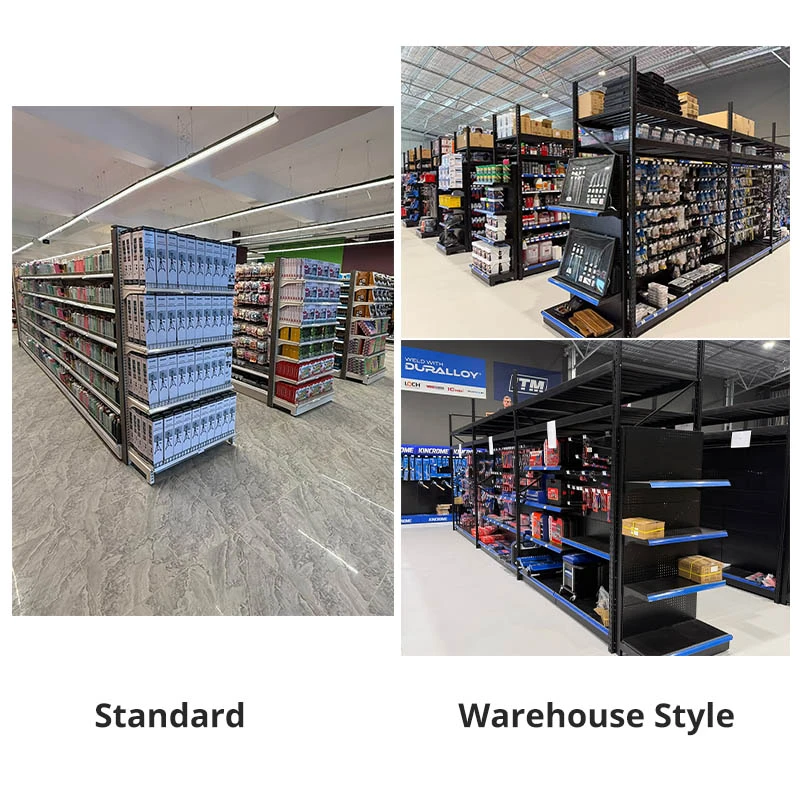
Gondola shelving is the central display system in many supermarket layouts. It is commonly used for packaged groceries, household products, personal care products, snacks, and other everyday merchandise.
A chain-wide shelving package may include:
- Single-sided wall gondola shelving.
- Double-sided island gondola shelving.
- End gondola displays.
- Different shelf and back-panel configurations.
- Matching shelving units for different merchandise departments.
The purchasing team can establish a standard product range for the chain and determine the quantities required by each store.
2. Department-Specific Display Fixtures
Different supermarket departments may require different display equipment.
For example:
- Grocery departments: Gondola shelving for packaged food, canned goods, and daily essentials.
- Beverage departments: Display fixtures suitable for bottled drinks and packaged beverages.
- Produce departments: Produce display equipment for fruit and vegetable sections.
- Promotional areas: End displays and dedicated promotional fixtures.
- Checkout areas: Checkout counters and related retail equipment.
A coordinated product package helps the chain source the main shelving system and supporting display equipment within the same project.
3. Store Signage and Additional Retail Equipment
Store fixtures also contribute to the overall shopping environment and brand presentation.
Depending on the project requirements, a supermarket equipment package may include:
- Shopping carts and trolleys.
- Ceiling signs and department identification signs.
- Decorative lighting and ceiling display elements.
- Checkout counters.
- Produce displays and other specialized fixtures.
For supermarket chains planning several new locations, consolidating these requirements helps create a more coordinated store procurement package.
How to Standardize Shelving Across Different Store Locations
One of the most important decisions in a multi-store rollout is determining which products should remain consistent and which should be adapted to each location.
A successful chain shelving program does not require every store to have exactly the same floor plan or fixture quantity. It requires a common product and brand standard that can be applied across different store formats.
Establish a Core Shelving Product Range
The purchasing team should first identify the shelving products that will be used throughout the retail network.
A typical core product range may include:
- Standard wall gondola shelving.
- Standard double-sided island gondola shelving.
- Matching end units.
- Common shelf and back-panel styles.
- Standard color selections.
This product range becomes the reference for future store orders.
Adapt Quantities to Each Store Format
A supermarket chain may operate several store formats:
Large-format supermarkets
These stores may require a broader shelving package covering multiple merchandise departments, larger island shelving areas, and additional promotional displays.
Standard neighborhood supermarkets
These stores may use a similar gondola product range but require different quantities and department combinations.
Compact urban stores
Smaller stores may need a more selective fixture package based on available floor space and merchandise categories.
The chain can retain its established product appearance while adjusting the number and arrangement of shelving units for each location.
Maintain Consistency During Store Expansion
When a chain opens additional branches, the original shelving specifications can serve as the purchasing reference for future orders.
This is particularly useful when:
- Opening stores in new cities or regions.
- Expanding an existing supermarket network.
- Ordering fixtures for several locations within one project.
- Maintaining consistent store branding.
- Purchasing additional shelving for new branches.
A centralized product specification makes repeat purchasing easier to coordinate.
How to Organize a Multi-Store Shelving Order
For a chain rollout project, the purchasing team should prepare a consolidated requirement rather than treating every store as an unrelated order.
A practical purchasing structure includes three parts.
1. Prepare the Store List
Start by identifying all locations included in the project.
For each store, provide:
- Store name or project reference.
- City or destination.
- Approximate store area.
- Store format.
- Planned opening date.
- Available floor plan or layout drawing.
This gives the manufacturer an overview of the project scope and delivery destinations.
2. Create a Standard Fixture Package
Define the main shelving and retail equipment products required across the chain.
For example:
| Product category | Standard purchasing scope |
|---|---|
| Wall gondola shelving | Standard wall display units |
| Island gondola shelving | Double-sided shelving units |
| End gondola shelving | End displays and promotional positions |
| Shelf components | Shelves and related display components |
| Retail fixtures | Produce displays, checkout counters, and other required equipment |
| Store equipment | Shopping carts, signage, and additional fixtures |
The final product list should reflect the actual requirements of the chain rather than assuming that every store needs identical equipment.
3. Consolidate Quantities by Location
The purchasing team can organize the order using a store-by-store fixture schedule.
For example:
| Store reference | Store format | Gondola shelving | Additional fixtures |
|---|---|---|---|
| Store A | Large supermarket | Based on approved layout | Department-specific package |
| Store B | Standard supermarket | Based on approved layout | Standard fixture package |
| Store C | Compact supermarket | Based on approved layout | Reduced fixture package |
The actual quantities should be confirmed using each store's layout and final product requirements.
This approach allows the buyer and manufacturer to review the entire order while keeping the requirements of individual locations clear.
Why Source Supermarket Chain Shelving Directly from a Manufacturer?
For multi-store projects, the supplier's product range and ability to coordinate the order are important purchasing considerations.
Working directly with a supermarket shelving manufacturer gives the purchasing team a direct channel for discussing product requirements, customization, and bulk supply.
When evaluating a manufacturer, supermarket chain buyers should consider:
- Product supply range: Can the manufacturer supply the gondola shelving and additional retail fixtures required for the project?
- Customization: Can product appearance, colors, and fixture configurations be matched to the chain's requirements?
- Bulk order coordination: Can the manufacturer review requirements across multiple store locations?
- Production consistency: Can the supplier maintain the agreed product specifications throughout the order?
- Project communication: Can the supplier coordinate product details and order requirements with the purchasing team?
HEDA SHELVES focuses on supermarket shelving and retail display equipment manufacturing, offering a supply option for buyers organizing shelving procurement for multiple store locations.
Get a Supermarket Chain Shelving Quotation from HEDA SHELVES
Planning a supermarket rollout across multiple locations?
HEDA SHELVES can help you source gondola shelving and related retail display equipment for your chain store project.
To prepare a project quotation, send us the following information:
- Number of stores: How many locations are included in the project?
- Store formats: Are they large supermarkets, standard supermarkets, or compact neighborhood stores?
- Store layouts: Do you have floor plans, CAD drawings, or preliminary store layouts?
- Product requirements: Do you need wall gondolas, island gondolas, end displays, produce displays, checkout counters, or other retail fixtures?
- Customization requirements: Do you have preferred colors, branding requirements, or special fixture configurations?
- Project schedule: When do you plan to open each store, and will the orders be delivered in one batch or multiple phases?
You can send the information for all locations together, even if some store layouts or quantities are still being finalized.