


Mezzanine Floor Installation Process Step-by-Step
The mezzanine floor installation process is a structured, step-by-step journey that requires careful planning at every stage. This case study walks through our complete installation process for a Malaysia industrial warehouse - an 8-zone I-Beam mezzanine built for heavy-duty storage at 800-1000 kg/m².
Step 1 : Site Preparation
The first stage is where you prepare the site for installation. Make sure all obstacles are removed from the area - the site must be clean, clear, and safe to work on before any structural work begins.
Use chalk to mark the measurements directly on the floor slab. This helps pinpoint the precise locations where the support columns will be placed, ensuring your mezzanine footprint is accurate before steelwork begins.
Tips: Always scan the slab for embedded conduits or rebar before marking drill positions. Confirm slab thickness at each column point - a minimum of 150 mm is typically required.

Step 2 : Stand the Starter Structure
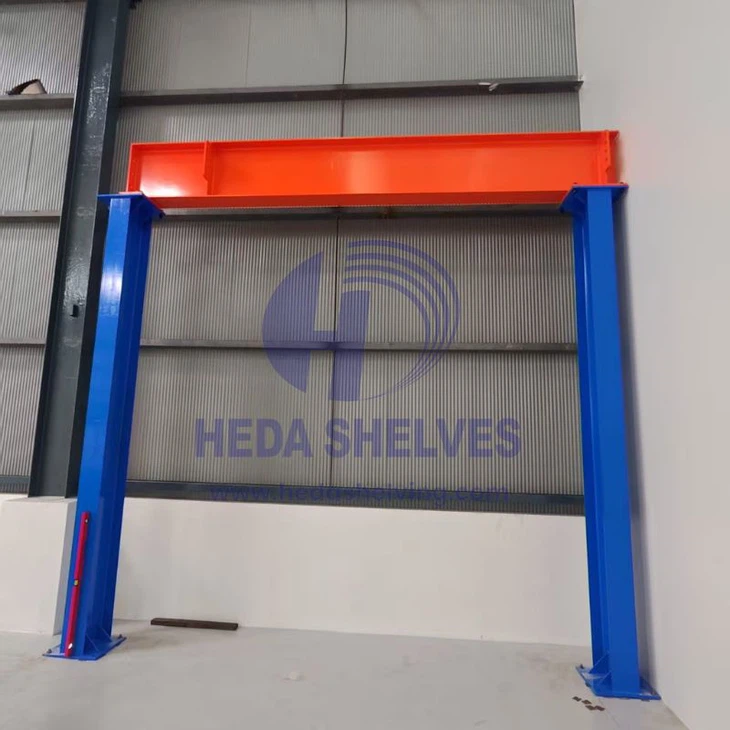
With the site marked out, establish the mezzanine's position and erect the main columns and primary beams. This forms the backbone of the entire structure, so accuracy at this stage is critical.

Fast Drawing In 3 Working Days
Malaysia Project - 8-Zone Industrial Layout
In this warehouse project, the I-Beam mezzanine floor was divided into 8 individual industrial storage zones. Each zone was designed to operate independently while sharing the same structural grid, maximising usable floor area and load distribution.
Step 3 : Install Beams and Framework
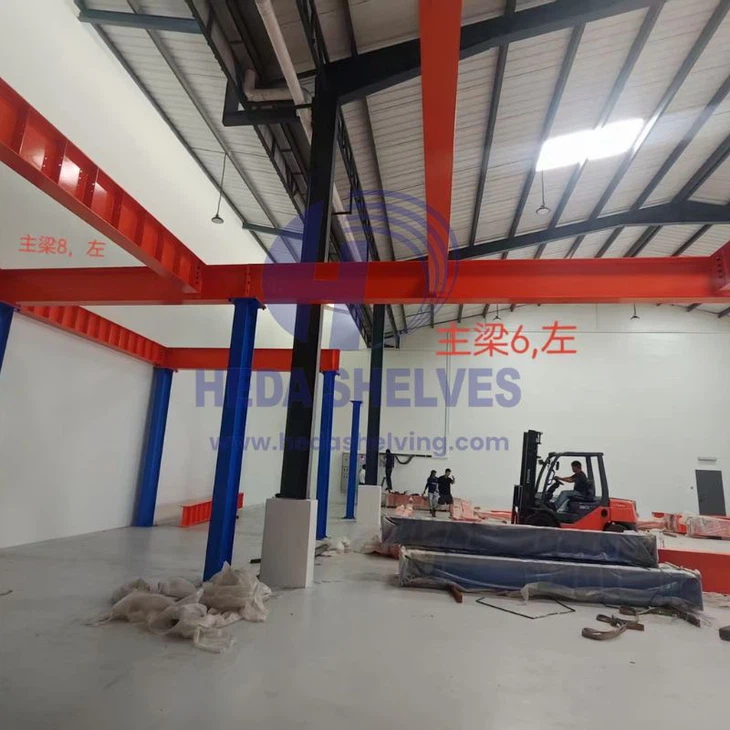
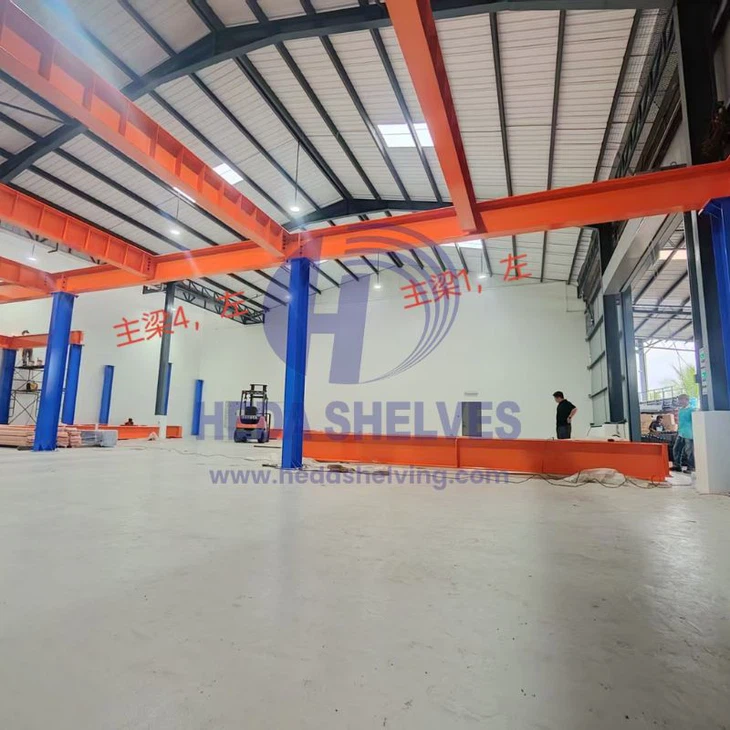
Once the starter frame is secured in position, the horizontal beams are installed to support the columns and carry the floor load. The beams form the structural skeleton of the mezzanine, their quality and secure installation directly determine the long-term durability of the entire system.
What is your mezzanine floor connection method
-
Bolted screw connections throughout
-
No welding required on-site
-
Faster, cleaner installation
-
Fully demountable & relocatable
Our mezzanine system connects entirely with high-grade bolts and screws, no on-site welding is needed. This significantly speeds up installation, reduces fire risk during construction, and means the structure can be disassembled and relocated if needed in the future.
Step 4: Install the Joint Beams
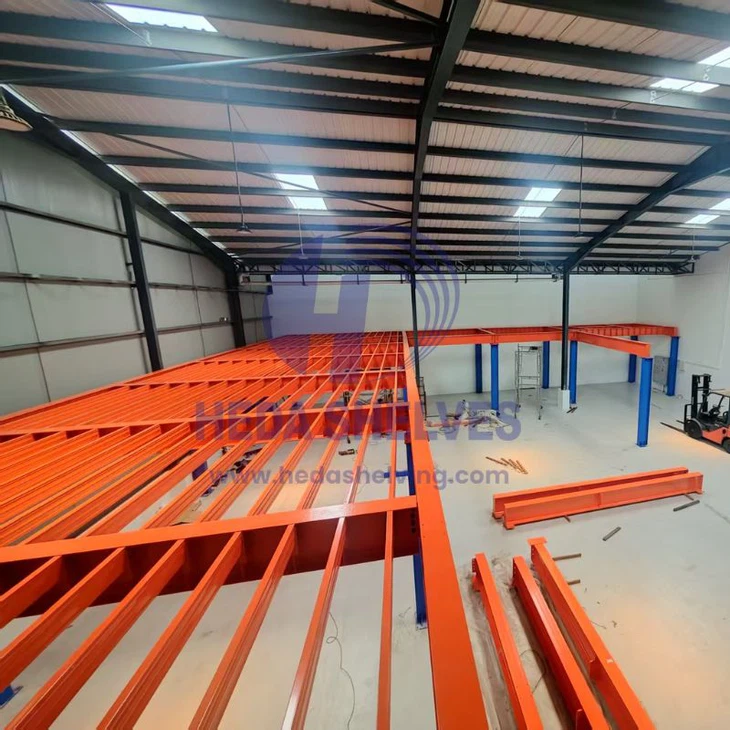
With the main structural frame complete, the joint beams are installed to provide direct flooring support across each storage zone. These secondary members bridge between primary beams and carry the concentrated loads transferred by the floor decking.
800 kg/m² Heavy-Duty Rating
For this Malaysia project, 15 joint beams were installed per storage unit. This dense beam spacing gives the system its impressive 800 kg/m² load capacity, suitable for pallet racking, heavy inventory, and industrial equipment.
Tip: Ensure all joint beam tops are flush and co-planar with a laser level before proceeding. Any variation here will result in an uneven floor surface.
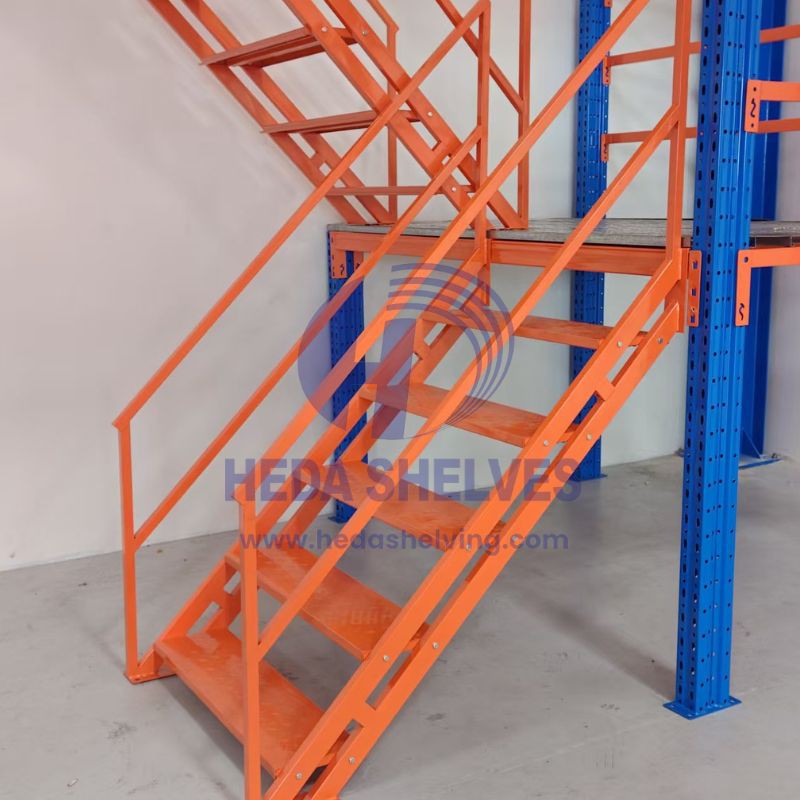
Step 5: Install the Access Ladder
Before the floor decking is laid, the access ladder is installed for workers to safely reach the mezzanine level during the remaining installation stages. Installing the ladder at this point avoids working at height without proper access.
Ladder Specification
- Q235B Cold Rolled Steel
- Same grade as mezzanine frame
- Hot-dip galvanised finish
- Anti-slip tread surface
Step 6 Install the Flooring
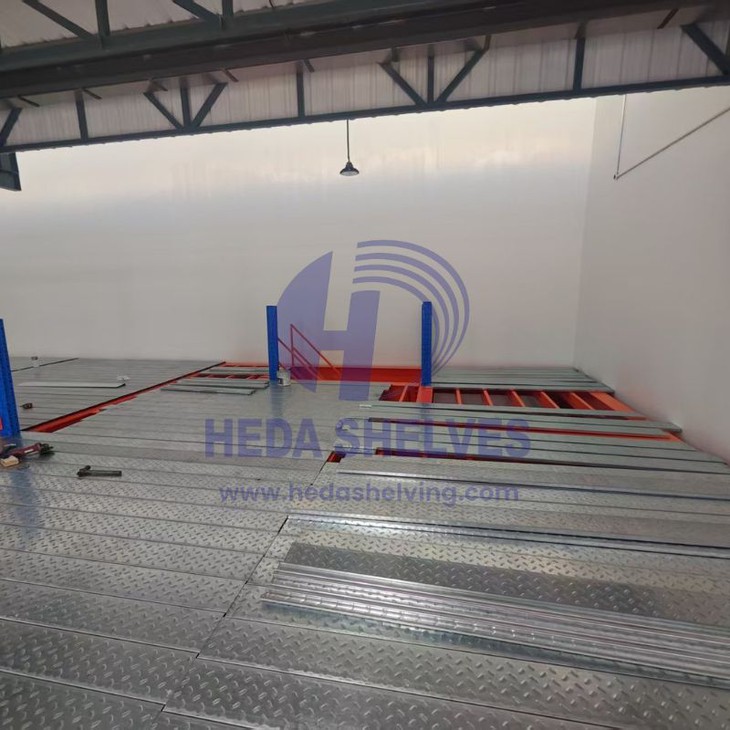
With the structure complete and access in place, it is time to install the mezzanine floor surface. The right flooring material depends on your load requirements, safety needs, and intended use.
Malaysia Case: Steel Bar Grating
The Malaysia warehouse client selected steel bar grating flooring for this project. Grating is the ideal choice for heavy industrial use: it supports extreme loads, allows light and air to pass through both levels, and its open surface provides excellent slip resistance even in dusty or humid warehouse conditions.
Step 7: Install Safety Accessories
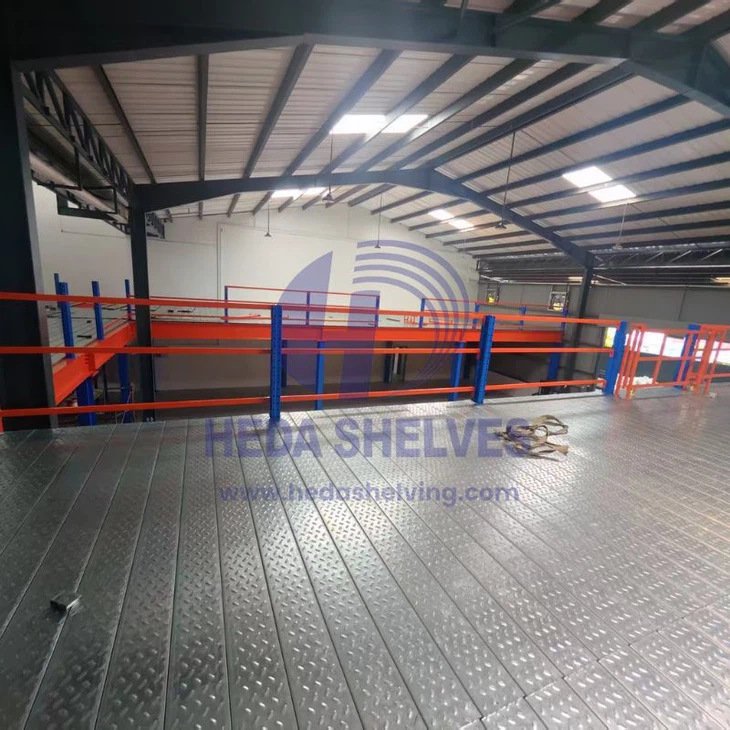
Safety features are non-negotiable. Handrails, guiderails, safety gates, and kickplates must be installed along all open edges of the mezzanine and stairway before the level is put into use.
Safety System Components
- Handrail: min. 1100 mm height
- Mid-rail at 550 mm height
- 100 mm kickplate at all edges
- Self-closing safety gate
- Stair handrails both sides
- Entry point gate & signage
On the upper mezzanine level, handrails and a safety gate help protect both employees and products from edge-related accidents. Kickplates prevent objects from being accidentally kicked off the edge and falling to the level below, a critical safety measure in any busy warehouse environment.
Step 8 : Final Inspection & Handover
Once the full mezzanine installation is complete, a thorough inspection is essential before the structure is handed over for use. This step ensures the mezzanine meets all structural integrity and safety standards.
Final Inspection Checklist
- Check every bolted connection
- Verify column plumb and alignment
- Test handrail and gate security
- Confirm floor fixings are complete
- Inspect stair tread nosings
- Review load rating signage
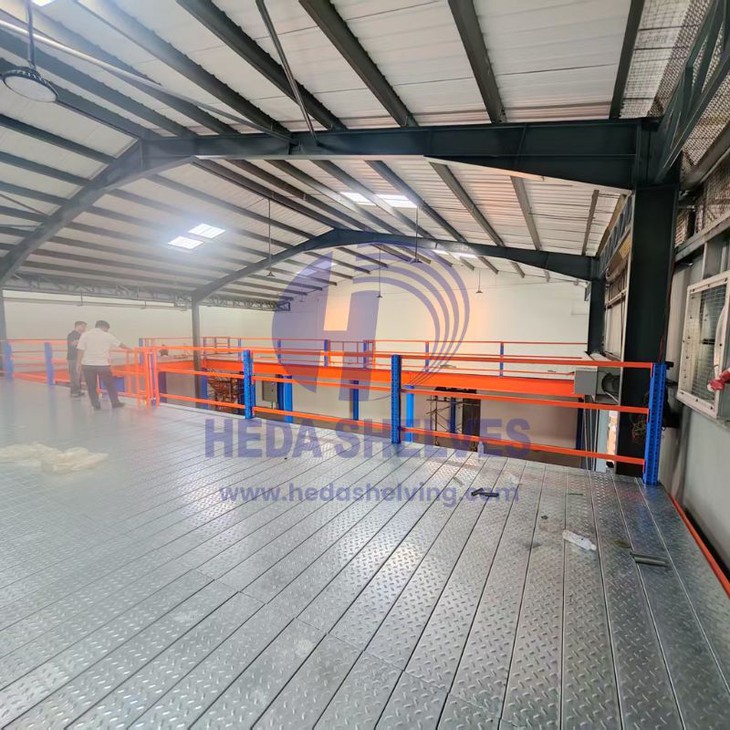
After the structural inspection, you can integrate a racking system to organise your inventory across both levels. Ensure racking leg positions are aligned with joint beams, not spanning between them, to correctly transfer point loads into the structure.
Post-Install: Add Your Racking System
The completed mezzanine provides a ready platform for warehouse racking. With 800 kg/m² capacity across all 8 zones, this Malaysia project was fully equipped with heavy-duty pallet racking on both the mezzanine level and the ground floor beneath, effectively doubling the warehouse's usable storage volume.
At HEDA SHELVES, we offers one-stop solution for your warehouse while industrial storage rack or mezzanine floor structure. Have any drawing for your commercial warehouse project or need a tailored solution for new warehouse? Send your require for free drawing, our engineer will finish it in 3 working days.
Read More:
How to Build a Warehouse Mezzanine Racking for Factory Storage
Steel Platform vs. Rack-Supported Mezzanine: What's the Difference?
How Much Does a Modular Mezzanine Floor Cost? Complete Pricing Guide in 2025