


In auto part stores or spare parts warehouses, tires are a common inventory to store. Selective racking or traditional stackable rack? Which one right for you and how to choose the right size?
This guide will cut through the confusion. From type storage to real-world applications, we'll go over how to pick the best racking system for your setup and how to avoid common mistakes so you can load more, save space, and more efficiently.
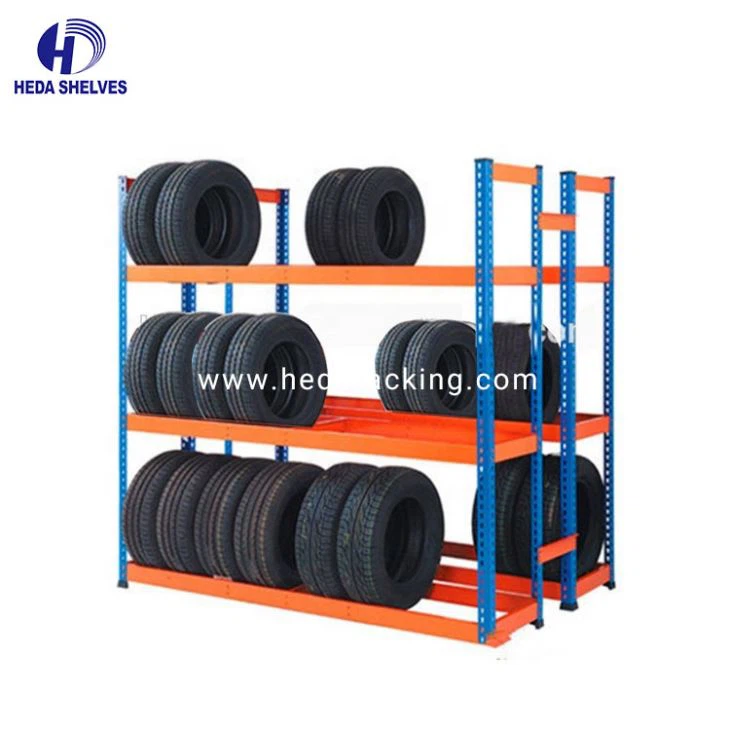
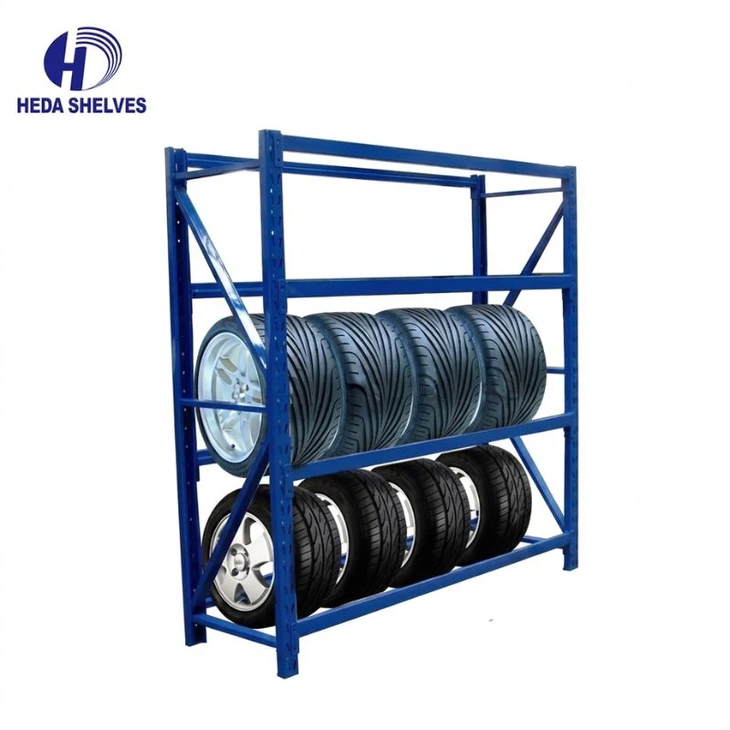

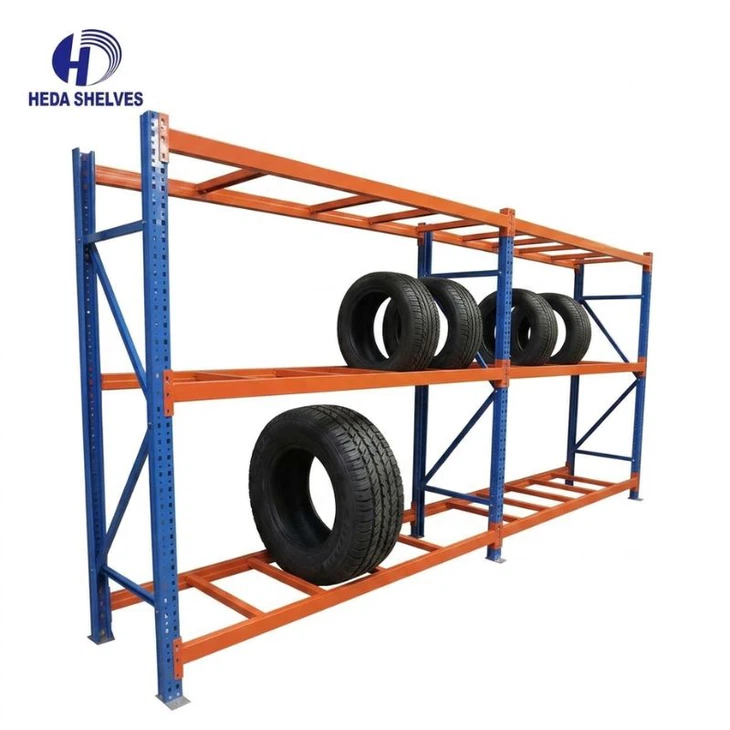
What Does 'tire and wheel racking Size' Mean?
Tire and wheel racking size refers to the dimensions and specifications of storage racks designed to hold tires and wheels, aligned with the size and type of the tires or wheels being stored. It encompasses:
Tire/Wheel Size: The physical dimensions of the tires or wheels, as indicated by sidewall markings (e.g., P225/65R17), including:
Width: e.g., 225 mm.
Aspect Ratio: Sidewall height as a percentage of width, e.g., 65%.
Rim Diameter: Wheel size in inches, e.g., 17 inches.
Weight: Varies by tire type, e.g., ~20 lbs for passenger tires, ~50–60 lbs for truck tires.
Racking Size: The dimensions of the storage rack, designed to fit these tires/wheels, including:
Upright Size: Height and width of the vertical frame, e.g., 8–16 ft tall.
Beam Size: Length of horizontal supports, e.g., 4–12 ft.
Depth: Depth of the rack to accommodate tire width or stacking orientation (horizontal or vertical), e.g., 12–30 inches.
Load Capacity: Maximum weight the rack can hold, e.g., 500–1000 lbs per level.
This term ensures racks are properly sized for safe and efficient storage in settings like tire shops, warehouses, or garages, matching the rack's dimensions to the tire/wheel type (e.g., passenger, light truck, or specialty tires) and storage configuration.
Tire Racking Size Chart: Size, Diameter & Applications
Below is a sample tire racking size chart based on common tire types, their dimensions, and corresponding rack specifications. Note that actual rack sizes vary by manufacturer, so this is a generalized guide.
| Tire Type | Tire Size Example | Diameter (in) | Upright Size (ft) | Beam Size (ft) | Depth (in) | Applications |
|---|---|---|---|---|---|---|
| Passenger (P-Metric) | P205/55R16 | 24.9 | 8–12 (H), 3–4 (W) | 4–8 | 12–18 | Cars, SUVs, crossovers |
| Light Truck (LT) | LT265/75R16 | 31.6 | 10–14 (H), 4–5 (W) | 6–10 | 18–24 | Pickups, vans, towing vehicles |
| Special Trailer (ST) | ST205/75R14 | 26.1 | 8–12 (H), 3–4 (W) | 4–8 | 12–18 | Boat trailers, utility trailers |
| High Flotation | 35x12.50R17LT | 35.0 | 12–16 (H), 5–6 (W) | 8–12 | 24–30 | Off-road vehicles, large trucks |
| Motorcycle | 180/55ZR17 | 25.0 | 6–10 (H), 2–3 (W) | 3–6 | 10–14 | Motorcycles, scooters |
How Tire Types Affects Size Choice?
Tire types significantly influence the choice of racking size due to differences in dimensions, weight, and storage requirements. Here's how:
Passenger Tires (P-Metric, Euro-Metric):
Size: Smaller, e.g., 205/55R16 (24.9" diameter, ~8" width).
Impact: Require compact racks with smaller uprights (8–12 ft) and beams (4–8 ft). Depth is minimal (12–18") as tires are often stored horizontally.
Storage: High-density storage is possible due to lighter weight (~20–30 lbs per tire).
Light Truck Tires (LT-Metric):
Size: Larger, e.g., LT265/75R16 (31.6" diameter, ~10" width).
Impact: Need taller uprights (10–14 ft) and longer beams (6–10 ft) to handle increased diameter and weight (~40–60 lbs). Deeper racks (18–24") for stability.
Storage: Heavier load requires reinforced racks with higher weight capacity.
Special Trailer Tires (ST):
Size: Moderate, e.g., ST205/75R14 (26.1" diameter, ~8" width).
Impact: Similar to passenger tires but may require specific racks for trailer tire stacks. Depth and beam size align with passenger tire racks.
Storage: Often stored in bulk for trailer manufacturers, needing modular racks.
High Flotation Tires:
Size: Very large, e.g., 35x12.50R17LT (35" diameter, ~12.5" width).
Impact: Demand the largest racks with tall uprights (12–16 ft), long beams (8–12 ft), and deep frames (24–30"). Heavy weight (~60–100 lbs) requires robust construction.
Storage: Vertical storage may be preferred to save space, requiring deeper racks.
Motorcycle Tires:
Size: Small and narrow, e.g., 180/55ZR17 (25" diameter, ~7" width).
Impact: Fit on smaller racks with shorter uprights (6–10 ft) and beams (3–6 ft). Shallow depth (10–14") suffices.
Storage: Lightweight (~10–20 lbs), allowing for high-density, compact racks.
How to Choose the Right Tire and Wheel Racking Size?
Selecting the appropriate tire and wheel racking size involves matching the rack to your tire types, storage needs, and facility constraints. Follow these steps:
Assess Tire/Wheel Specifications:
Check tire sidewall markings (e.g., P225/65R17) to determine width, diameter, and weight.
Calculate tire diameter: (2 × width × aspect ratio) + rim diameter (in inches).
Note tire type (P, LT, ST, etc.) and quantity to estimate total weight and volume.
Evaluate Storage Requirements:
Quantity: How many tires/wheels to store? E.g., 50 passenger tires vs. 20 truck tires.
Orientation: Horizontal (stacked flat) or vertical (standing)? Vertical saves space but needs deeper racks.
Access: Frequent access (e.g., tire shop) requires open, modular racks; long-term storage (e.g., warehouse) can use denser setups.
Measure Facility Space:
Height: Ceiling height limits upright size. Allow clearance for loading/unloading (e.g., 2–3 ft above top rack level).
Floor Area: Determine available floor space for rack width and depth.
Aisles: Ensure enough space for forklifts or manual handling (e.g., 3–5 ft aisles).
Select Rack Specifications:
Upright Size: Choose height based on tire diameter and stacking levels (e.g., 10 ft for LT tires, 8 ft for passenger).
Beam Size: Match beam length to tire width and quantity per level (e.g., 6 ft for 4 passenger tires).
Depth: Align with tire width or stacking orientation (e.g., 18" for horizontal passenger tires, 24" for vertical LT tires).
Load Capacity: Ensure rack supports total tire weight (e.g., 500 lbs per level for 10 LT tires at 50 lbs each).
Consider Rack Type:
Pallet Racks: Versatile for various tire sizes, adjustable beams.
Tire-Specific Racks: Designed with angled beams for tire storage, ideal for shops.
Cantilever Racks: Suitable for vertical tire storage, easy access.
Stackable Racks: Portable, good for seasonal storage.
Check Safety and Compliance:
Verify rack load ratings meet or exceed tire weight.
Ensure racks comply with local safety standards (e.g., OSHA for warehouses).
Use seismic-rated racks in earthquake-prone areas.
Consult Professionals:
Work with rack manufacturers or tire storage experts to confirm compatibility.
Reference vehicle manuals or tire specs for precise measurements.
Example:
Need: Store 100 P205/55R16 tires (24.9" diameter, ~20 lbs each).
Solution: Use a 10 ft (H) x 4 ft (W) upright, 6 ft beams (holds 4 tires per level), 18" depth. A 5-level rack stores 20 tires per rack, needing 5 racks total. Ensure each level supports 80 lbs (4 × 20 lbs).
Conclusion: Size Smart, Load more
What determines the size of tire racking or racking system for wheel warehouse? Choosing the right tire rack size boils down to three factors: tire sizes, rack deep, and access. Choosing the right tire and wheel rack size isn't just about racking system specifications-it's about safety, efficiency, and less maintenance.
Ready to upgrade? check our pallet racking for tires here, featuring oil-resistant jackets and fine-strand flexibility. From store tire racking to racking systems for a car part distributor center, Heda Shelves manufacturers are available. Our consultants will customize the optimal solution for you within 24 hours!
FAQs About Tire Racking Sizes
How many tires can a typical rack hold?
Capacity depends on rack width, depth, and number of levels. For instance, a 4.6-meter wide rack with 3 levels and 40 cm depth can hold roughly 72 tires. Increasing the number of levels or rack width increases capacity accordingly.
Can tire racks be expanded or reconfigured?
Yes, many tire racks are modular and adjustable, allowing you to add more levels or bays as your storage needs grow. Some racks also come with mobile bases or castors for easy repositioning within your facility. If you want to update your tire shop capacity or set up a new carpart warehouse, contact HEDA Shelves Experts.
How many tires can a typical rack hold?
Capacity depends on rack width, depth, and number of levels. For instance, a 4.6-meter wide rack with 3 levels and 40 cm depth can hold roughly 72 tires. Increasing the number of levels or rack width increases capacity accordingly.