


Increase your warehouse Space but hard to find the right warehouse storage racking ? This guide covers the basics, system selection, and design characteristics for maximizing storage efficiency and turnover.
Understanding Warehouse Storage Rack Requirements
Requirements for use
Different types of products can significantly affect shelf design. For example, short-term storage of inventory, such as food and beverage, requires a fast and easy to access sorting process for shelves, while long-term storage, such as heavy machinery parts, requires sturdy, durable shelves. In some temperature-sensitive stocks, shelves with low-temperature resistant materials are preferred.
Loading nature
The characteristics of the load, such as weight and shape, are crucial. Storing heavy products requires racks with a high load-bearing capacity, typically 1000 to 5000 kg, depending on the type of racking used. The shape of an item can also affect how they are stored; Irregularly shaped items may require customized shelving solutions to maximize space and accessibility.
Installation requirements and accessibility
Easy assembly and accessibility are essential for efficient operations. Rapid assembly minimizes downtime during setup, while accessible racking facilitates the loading and unloading process, improving workflow efficiency.
Dimensions and clearances
The dimensions of the shelves must be consistent with the space constraints of the warehouse to optimize storage efficiency. Sufficient clearance is necessary for both safety and functionality, allowing people and machines to move easily around the racks.
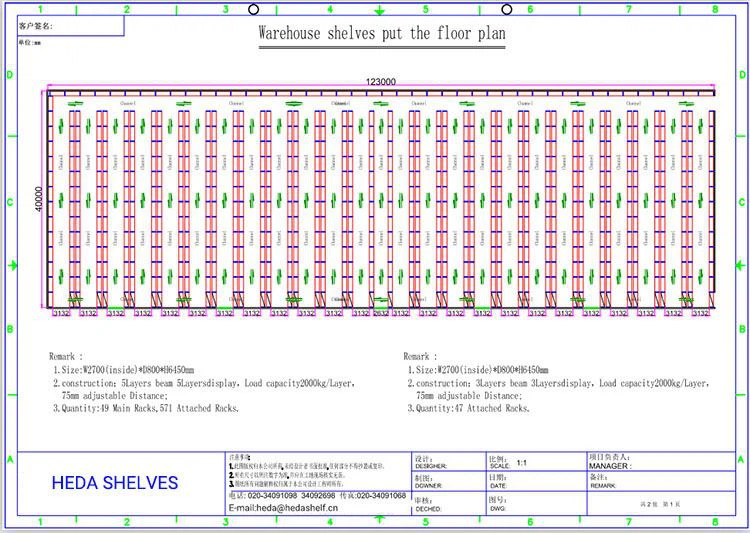
What are the Different Types of Warehouse Design?
By Warehouse Equipment
Traditional Warehouse: This design features aisles between rows of shelves or racks, facilitating easy access to stored items. It's ideal for businesses that manage a high volume of goods and require straightforward retrieval processes.
Flow-through Warehouse: In this layout, products enter at one end and move directly to shipping without being stored. This design is beneficial for businesses that prioritize quick shipping and have high turnover rates.
Cross-docking Warehouse: Goods are transferred directly from inbound to outbound transportation without being stored. This layout enhances speed and efficiency, making it suitable for industries focused on rapid distribution
Automated Warehouse: This design incorporates machinery for tasks such as moving products and tracking inventory. It's particularly advantageous for businesses aiming for high efficiency and reduced labor costs
Mezzanine Warehouse: A second level is added to maximize vertical space, providing additional storage without expanding the warehouse footprint. This is useful in environments where floor space is limited.
By Warehouse Workflow
U-Shaped Layout: The U-shaped design positions receiving and shipping areas at either end of a semicircular layout, with storage in the middle. This configuration promotes efficient movement and minimizes congestion
I-Shaped Layout:In this linear design, receiving is at one end, storage in the middle, and shipping at the opposite end, allowing for straightforward product flow but requiring more space for operations
L-Shaped Layout:This layout forms an L shape with separate areas for receiving and shipping on adjacent walls, optimizing space usage while facilitating efficient operations
Structural Integrity and Safety Features
Pressure Resistance
Shelves must possess a high load-bearing capacity to ensure stability under pressure. This characteristic is essential for preventing accidents and ensuring that stored goods remain secure
Fire and Shock Resistance
Compliance with safety standards is non-negotiable. Materials used in shelf construction should be fire-resistant and capable of withstanding shock to protect both goods and personnel
Locking Mechanisms
Different types of locking mechanisms (e.g., bolt locks or screw locks) ensure that shelves remain stable under various conditions. The choice of locking system should be based on the type of goods stored; heavier items may require more robust locking solutions
Foundation Fixation
Securing shelves to the ground enhances stability, particularly in environments where heavy loads are common or where seismic activity may pose a risk. Proper foundation fixation helps prevent tipping or collapse under load.

Labeling and Inventory Management
Conspicuous Markings: Clear labeling is essential for efficient inventory management. Labels should be easy to read and positioned prominently to facilitate quick identification of stored items
Label Specifications: Considerations for label size, clarity, and color can significantly impact their effectiveness. High-contrast colors improve visibility, while larger labels can enhance readability from a distance
Load Indicators : Marking maximum load capacities directly on shelves informs users about safe loading practices, reducing the risk of overloading and potential accidents
Types of Warehouse Storage Racking
Selective Pallet Racking
Selective pallet racking is the most common type of racking system used in warehouses, providing direct access to each pallet. This system is versatile and adaptable, making it suitable for a wide range of products.
Accessibility: Each pallet is easily accessible, allowing for efficient loading and unloading.
Configuration Options: Available in single-deep and double-deep configurations. Single-deep allows one pallet per position, while double-deep stores two pallets back-to-back, increasing storage density but requiring special forklifts for access.
Cost-Effectiveness: Generally offers the lowest cost per pallet position and is easy to install and adjust based on changing inventory needs
Drive-In and Drive-Through Racking
Drive-in and drive-through racking systems are high-density storage solutions that minimize aisle space, allowing for more pallets to be stored in a smaller area.
Drive-In Racking: Requires only one aisle for access and operates on a Last-In, First-Out (LIFO) basis, making it ideal for homogeneous products with low turnover.
Drive-Through Racking: Allows access from both sides and operates on a First-In, First-Out (FIFO) basis, suitable for high-turnover products
Space Optimization: Significantly increases storage capacity compared to selective racking by reducing the number of aisles needed.
Cantilever Racking
Cantilever racking is designed specifically for storing long or bulky items such as lumber, pipes, or furniture.
Versatility: Accommodates various lengths and weights without requiring special handling equipment.
Open Design: Allows for easy access from all sides, enhancing workflow efficiency.
Customization: Adjustable arms can be configured based on the size of the items being stored
Mezzanine Racking
Mezzanine racking systems create additional storage space by incorporating elevated platforms above existing operations.
Vertical Space Utilization: Ideal for warehouses with high ceilings, maximizing vertical space.
Multi-Level Access: Can include staircases or lifts for easy access to upper levels.
Customizable Layouts: Tailored to fit specific operational needs, integrating various shelving types below the mezzanine
Longspan Shelving
Longspan shelving is designed for manual storage of medium to large-sized products that do not fit standard pallet racks.
Flexibility: Suitable for a variety of products; adjustable shelf heights accommodate different item sizes.
Ease of Assembly: Typically easier to assemble than other racking systems, making it popular in smaller warehouses or retail environments.
Direct Access: Provides open access to stored items for quick retrieval
Live Pallet Racking
Live pallet racking systems utilize gravity and pushing forces to optimize pallet storage.
Gravity FIFO System: Allows pallets to slide down an inclined rail, facilitating efficient stock rotation.
Push-Back LIFO System: Stores pallets at two depths, achieving higher storage density while managing inventory using the LIFO method
High Density Storage: Ideal for warehouses with limited space but high inventory turnover.
Multi-Tier Racking
Multi-tier racking systems maximize vertical space by creating multiple levels of storage accessed via stairs or lifts.
Space Optimization: Increases storage capacity by utilizing height effectively.
Manual Access: Designed primarily for manual picking operations, suitable for smaller items or boxes
Design Considerations for Efficiency
Workflow Optimization: The layout of shelving affects inventory flow significantly. An efficient arrangement minimizes travel time between different areas of the warehouse, enhancing productivity
Space Utilization: Maximizing storage density involves strategic planning of shelf dimensions and arrangements. Techniques such as vertical stacking can help utilize available height effectively
Adaptability and Scalability: Designing shelving systems that can adapt to future growth ensures long-term usability. This flexibility allows warehouses to respond to changing inventory needs without major overhauls.
In conclusion, designing an efficient warehouse rack layout involves ensuring your needs, understanding the features of racking systems, assessing storage requirements, and optimizing space utilization. Understanding the different types of warehouse storage racking systems and their layout features is essential for optimizing warehouse storage space and improving operational efficiency.
Discover an efficient way to operate your warehouse storage? Contact HEDA Shelves for expert advice on racking solutions and discover how our Warehouse Storage Rack can revolutionize your warehouse efficiency.