


What is a mezzanine floor?
A mezzanine floor is an intermediate floor installed between the main floor and the roof of a building. Essentially, it's a raised platform that expands usable space within an existing structure without the need for costly building expansions. Mezzanine floors are typically free-standing structures that can be disassembled and relocated. These solutions offer a versatile way to maximize vertical space, making them a popular choice for various industries seeking efficient storage and operational improvements.
Purpose of Mezzanine Floor
Mezzanine floors offer a versatile solution for maximizing space utilization in various industrial and commercial settings. By leveraging vertical space, businesses can create additional storage, production, or office areas without the need for expensive building expansions. These structures can be customized to fit specific needs and are particularly beneficial for businesses looking to optimize their existing facilities.
Maximum load for Mezzanine Floor
Ensuring the safety and functionality of a mezzanine floor requires careful consideration of its load-bearing capacity. The maximum load a mezzanine floor can handle is determined by factors such as the materials used, the design of the structure, and the intended use of the space.
Properly calculating and adhering to load limits is essential for preventing accidents and ensuring the longevity of the mezzanine floor.
Generally, a pair of beams can hold up to 4 tonnes, depending on the frame duty.
Standard-duty frames typically carry around 9 tonnes, medium-duty frames can hold about 15 tonnes,
Heavy-duty structural mezzanine frames can reach a maximum load of 20 tonnes.
These are general limits, influenced by frame height, depth, and design. Always check the load notice fitted to each rack to know the maximum loading of your racking.
| Type of Mezzanine Floor | Typical Load Capacity (kg/m²) | Common Use |
| Light Storage | 250 kg/m² (2.4 kN/m²) | Small storage, light-duty applications |
| Office Space | 300 kg/m² (3 kN/m²) | Offices, meeting rooms |
| Retail/Commercial | 400 kg/m² (4 kN/m²) | Retail displays, customer-facing areas |
| Medium Use Storage | 500 kg/m² (5 kN/m²) | General storage, medium-duty applications |
| Heavy Storage & Industrial | 1000 kg/m² (10 kN/m²) | Heavy machinery, industrial equipment |
| Structural Mezzanine | Up to 600 kg/m² (6 kN/m²) | Heavy-duty applications, machinery support |
Components of an Industrial Mezzanine Floor
Industrial mezzanine floors consist of several key components working together to provide a robust and versatile elevated space. The primary elements include the frame, decking, and shelving systems. These components are designed to support heavy loads, provide a safe walking surface, and efficiently store goods. By understanding the function of each component, businesses can optimize their mezzanine floor for maximum performance and productivity.
Frame: Provides structural support and stability for the entire mezzanine floor.
The frame is the backbone of the mezzanine floor, typically constructed from steel columns and beams. It supports the weight of the decking, stored goods, and personnel, ensuring the structure's integrity. Key considerations include upright duty (denoted as H for heavy-duty, M for medium-duty, or S for standard-duty), and racking frame size (height x width in mm).
Decking: Forms the walking surface of the mezzanine floor, providing a safe and durable platform.
Decking materials vary depending on the application, including options like steel, wood, or concrete. The decking must be strong enough to withstand the intended load and provide a comfortable and safe surface for workers.
Shelving System: Optimizes storage capacity and organization on the mezzanine floor.
Shelving systems can be customized to accommodate different types of goods, from small parts to bulky items. They enhance storage density and improve accessibility, making the mezzanine floor an efficient storage solution.
How to Choose Flooring for Your Mezzanine Floor
Selecting the right flooring material is crucial for the functionality and safety of a mezzanine floor. Factors such as durability, load capacity, and intended use must be considered. Common options include timber, steel, and composite materials, each offering unique benefits and drawbacks. Choosing the appropriate flooring ensures the mezzanine floor meets the specific needs of the business and provides a safe and efficient working environment.
Timber: Cost-effective and suitable for light-duty applications.
Timber flooring is a budget-friendly option that provides a comfortable walking surface. However, it may not be suitable for heavy loads or high-traffic areas.
Steel: Durable and ideal for heavy-duty industrial environments.
Steel flooring offers excellent strength and resistance to wear and tear, making it ideal for warehouses and manufacturing facilities. It can withstand heavy loads and provides a safe, non-slip surface.
Composite Materials: Versatile and customizable for various applications.
Composite materials offer a balance of strength, durability, and aesthetic appeal. They can be tailored to meet specific requirements, such as slip resistance, fire resistance, or sound dampening.
Types Of Industrial Mezzanine Floor
Industrial mezzanine floors come in various types, each designed to address specific storage and operational needs. Common types include racking mezzanines, longspan mezzanines, and structural mezzanines. Understanding the characteristics of each type allows businesses to choose the most appropriate solution for their unique requirements, optimizing space utilization and improving efficiency.

Racking mezzanines utilize the support of existing shelving racks to create an elevated platform. This design is cost-effective and ideal for businesses looking to maximize storage capacity in a warehouse or distribution center.
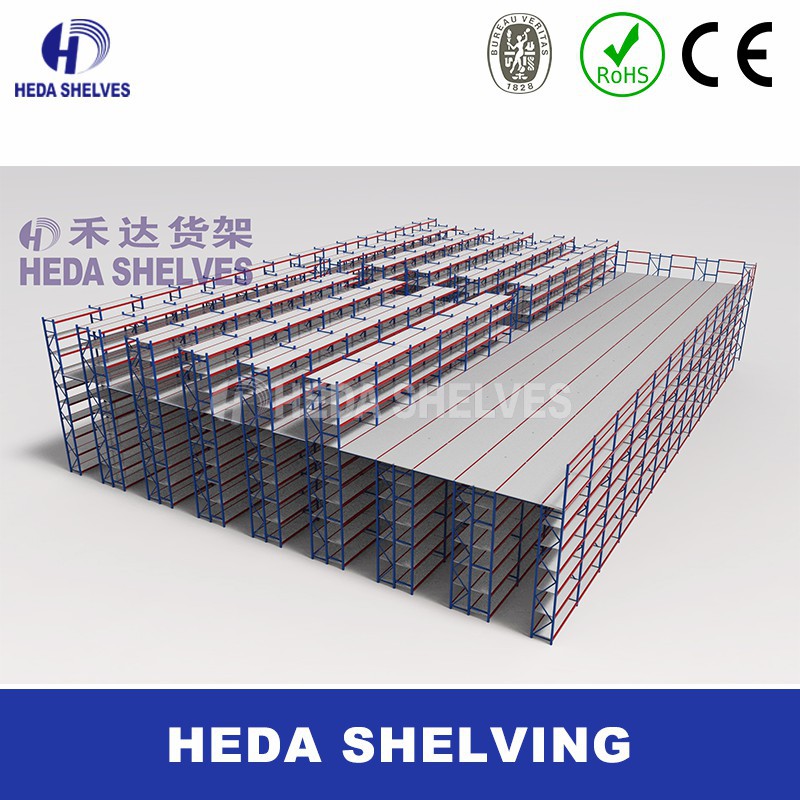
Longspan mezzanines feature fewer support columns, allowing for greater flexibility in layout and accommodating larger items or equipment. This type is suitable for manufacturing facilities or areas requiring unobstructed space.

Structural mezzanines are designed to handle substantial loads, making them suitable for supporting heavy machinery, equipment, or dense storage. They are typically constructed from heavy-duty steel and engineered for maximum stability.
How are mezzanine floors built?
The construction of a mezzanine floor involves careful planning, design, and installation to ensure structural integrity and safety. The process typically includes assessing the existing building structure, creating detailed plans, fabricating the necessary components, and assembling the mezzanine floor on-site. Proper installation by experienced professionals is crucial for ensuring the mezzanine floor meets all safety standards and building codes.
At Heda Shelves, we handle all legal requirements to ensure your custom mezzanine floor is fully compliant and safe for use. We even obtain planning permission on your behalf to make your mezzanine floor installation smooth and hassle-free. We design and manufacture mezzanine floors specifically to your needs and the environment you're working in, components and capacity can vary significantly and can depend on a lot of factors, from what you're stocking on them to how deep the beam is.
Read More: Ultimate Guide: How to Build Cost-Efficient Storage Mezzanine Racks
Benefits of installing a mezzanine floor
Installing a mezzanine floor offers numerous benefits, including optimized space utilization, cost savings, design flexibility, modular design, increased operational efficiency, and a safer workplace. These advantages make mezzanine floors a valuable investment for businesses looking to improve their facilities and enhance their bottom line.
- Optimal Use of Space: Maximizes vertical space, creating additional storage or operational areas. Mezzanine floors allow businesses to take advantage of unused vertical space, effectively expanding their facilities without the need for costly building expansions. This is particularly beneficial for businesses in densely populated areas or those with limited square footage.
- Save Hundreds to Thousands of Dollars: Avoids the expense of relocating or expanding the building footprint. By utilizing existing vertical space, mezzanine floors eliminate the need for expensive building expansions or relocations. This can result in significant cost savings, making mezzanine floors a cost-effective solution for growing businesses.
- Flexibility in Design: Customizable to fit specific needs and requirements. Mezzanine floors can be tailored to meet the unique needs of each business, with options for different sizes, shapes, and configurations. This flexibility allows businesses to optimize their space for specific storage, production, or office requirements.
- Modular Design: Easy to install, disassemble, and reconfigure as needed. The modular design of mezzanine floors allows for quick and easy installation, as well as the ability to disassemble and reconfigure the structure as business needs change. This flexibility makes mezzanine floors a versatile and adaptable solution for growing companies.
- Higher Operational Efficiency: Streamlines workflows and improves productivity. By creating additional space and optimizing storage, mezzanine floors can streamline workflows and improve productivity. This can lead to faster order fulfillment, reduced labor costs, and increased overall efficiency.
- Create a Safer Workplace: Provides designated areas for specific tasks, reducing congestion and accidents. Mezzanine floors can help create a safer workplace by providing designated areas for specific tasks, reducing congestion and the risk of accidents. This can improve employee morale and reduce the likelihood of workplace injuries.
How Much Does a Mezzanine Floor Cost?
The cost of a mezzanine floor varies depending on factors such as size, materials, design complexity, and installation requirements. Obtaining quotes from multiple suppliers and considering long-term benefits is essential for making an informed investment decision. While the initial cost may seem significant, the long-term savings and increased efficiency can make a mezzanine floor a worthwhile investment.
Usage & Application of Mezzanine Floor
Mezzanine floors have a wide range of applications across various industries. They are commonly used for storage, production areas, office space, retail displays, and more. Their versatility and adaptability make them a valuable asset for businesses looking to optimize their facilities and improve their operations.
FAQ
A: The construction time for a mezzanine floor can vary depending on the size and complexity of the project. Generally, a small mezzanine floor can be installed within a few days to a week, while larger projects may take several weeks. Factors such as design, materials, and labor availability influence the overall duration.
Q: What Are the Common Materials Used for Mezzanine Floors?
A: Common materials include steel beams for the frame, plywood or chipboard for the decking, and steel or timber for support posts. The choice of material depends on the intended use and load capacity of the mezzanine floor.
Q: Do I Need a Professional to Build a Mezzanine Floor?
A: While it's possible to build a mezzanine floor yourself, hiring a professional is recommended to ensure safety and compliance with local building regulations. Professionals can also provide custom designs tailored to your specific needs.
Q: How Do I Ensure My Mezzanine Floor Is Safe?
A: Safety is paramount when building a mezzanine floor. Ensure that the structure is designed to handle the intended load, install guardrails to prevent falls, and comply with all local safety regulations. Regular inspections can also help identify and address any potential hazards.
Q: Can I Use a Mezzanine Floor for Heavy Machinery?
A: Yes, mezzanine floors can support heavy machinery if properly designed and constructed. Structural mezzanines are specifically engineered to handle substantial loads, making them suitable for supporting heavy equipment.
Q: What Are the Key Considerations for Designing a Mezzanine Floor?
A: Key considerations include assessing the existing structure's load-bearing capacity, ensuring compliance with local building codes, and selecting materials that meet the intended use and load requirements. Additionally, consider factors like accessibility, lighting, and ventilation in the design.
A: The choice of flooring depends on the intended use of the mezzanine. For heavy-duty applications, steel or concrete may be suitable, while chipboard or plywood is more cost-effective for lighter loads. Consider factors like durability, load capacity, and maintenance requirements when selecting flooring materials.
Get Your Free Tailor mezzanine floor Solution
Warehouse, distribution center, and commercial and industrial managers who want to save space and improve picking efficiency rely on Heda Shelves for high-quality custom mezzanine floors. From initial design to final installation, we handle every aspect of your mezzanine floor project quickly and with minimal disruption to your business.
Contact us today for a free, no-obligation consultation, site survey, and quote.